
And Of Course Comma
And Of Course Comma - A tropical climate is, of course , very humid, so we sweated all the time. We use of course to refer to things that are obvious or already known to the speaker and listener, or to everybody: Grammatically speaking, should there be a comma before of course when it's preceded by a conjunction? Place a comma before and after “and of course” to neatly nestle it within the sentence. It could be perfectly correct to answer considering the matter in hindsight, those thoughts of mine were of course ridiculous. here, 'course' is emphasized in speech, which leads to no pauses,. A comma after and isn't necessary to easily understand the sentence, and leaving it off improves sentence flow, being the way the sentence would most likely be spoken. Of course is a smooth phrase when you use it this way, but it's only correct when you give it a comma. See examples of of course as an introductory clause, a parenthetical element, or a conjunction. Transitional phrases must always have a comma. So that begins a sentence or clause does not take a comma unless a parenthetical phrase or clause follows,. We use of course to refer to things that are obvious or already known to the speaker and listener, or to everybody: Place a comma before and after “and of course” to neatly nestle it within the sentence. For example, “the qualifying relative would have suffered if the. We never got to eat the cake, of. Is the comma optional, never allowed, or allowed only in certain situations? Transitional phrases must always have a comma. Learn how to use commas before and after of course in different sentence positions. Of course is a smooth phrase when you use it this way, but it's only correct when you give it a comma. It could be perfectly correct to answer considering the matter in hindsight, those thoughts of mine were of course ridiculous. here, 'course' is emphasized in speech, which leads to no pauses,. Should the be a comma after of course? So that begins a sentence or clause does not take a comma unless a parenthetical phrase or clause follows,. The serial comma—the one before the conjunction in a series of three or more (it’s also known as the oxford comma)—suggests thoroughness (some consider it to be unnecessary); We never got to eat the cake, of. But the above sentence doesn't. Of course is a smooth phrase when you use it this way, but it's only correct when you give it a comma. But the above sentence doesn't feel right. We use of course to refer to things that are obvious or already known to the speaker and listener, or to everybody: Is the comma optional, never allowed, or allowed only. Of course, setting off a phrase like “of course” will emphasize the phrase itself. We use of course to refer to things that are obvious or already known to the speaker and listener, or to everybody: A tropical climate is, of course , very humid, so we sweated all the time. But the above sentence doesn't feel right. But to. For example, “the qualifying relative would have suffered if the. Use commas to separate words and word groups in a simple series of three or more items. See examples of of course as an introductory clause, a parenthetical element, or a conjunction. We never got to eat the cake, of. Had i written something like evidently, it's very easy to.,. We never got to eat the cake, of. He ordered a batch of cup noodles and other instant. Learn chatgpt210,000+ online coursesjoin 69m+ learnersstart learning today Of course, setting off a phrase like “of course” will emphasize the phrase itself. Use commas to separate words and word groups in a simple series of three or more items. But the above sentence doesn't feel right. Transitional phrases must always have a comma. He ordered a batch of cup noodles and other instant. The serial comma—the one before the conjunction in a series of three or more (it’s also known as the oxford comma)—suggests thoroughness (some consider it to be unnecessary); A tropical climate is, of course , very. It could be perfectly correct to answer considering the matter in hindsight, those thoughts of mine were of course ridiculous. here, 'course' is emphasized in speech, which leads to no pauses,. He ordered a batch of cup noodles and other instant. Transitional phrases must always have a comma. Grammatically speaking, should there be a comma before of course when it's. Learn chatgpt210,000+ online coursesjoin 69m+ learnersstart learning today Of course, setting off a phrase like “of course” will emphasize the phrase itself. Is the comma optional, never allowed, or allowed only in certain situations? Learn how to use commas before and after of course in different sentence positions. Use commas to separate words and word groups in a simple series. See examples of of course as an introductory clause, a parenthetical element, or a conjunction. Learn chatgpt210,000+ online coursesjoin 69m+ learnersstart learning today But the above sentence doesn't feel right. Grammatically speaking, should there be a comma before of course when it's preceded by a conjunction? Transitional phrases must always have a comma. Use commas to separate words and word groups in a simple series of three or more items. He ordered a batch of cup noodles and other instant. Of course, setting off a phrase like “of course” will emphasize the phrase itself. We use of course to refer to things that are obvious or already known to the speaker and listener,. See examples of of course as an introductory clause, a parenthetical element, or a conjunction. We never got to eat the cake, of. Of course is a smooth phrase when you use it this way, but it's only correct when you give it a comma. To ensure correct punctuation, your comma use here is twofold: Place a comma before and after “and of course” to neatly nestle it within the sentence. But to shift the emphasis to include the words that follow, you should omit the comma. Would you use a comma between two independent clauses that are both subordinate to the same “if”? Of course, setting off a phrase like “of course” will emphasize the phrase itself. Learn how to use commas before and after of course in different sentence positions. Use commas to separate words and word groups in a simple series of three or more items. The serial comma—the one before the conjunction in a series of three or more (it’s also known as the oxford comma)—suggests thoroughness (some consider it to be unnecessary); We use of course to refer to things that are obvious or already known to the speaker and listener, or to everybody: But the above sentence doesn't feel right. Had i written something like evidently, it's very easy to., i'd feel like there should be a comma in there. Is the comma optional, never allowed, or allowed only in certain situations? Should the be a comma after of course?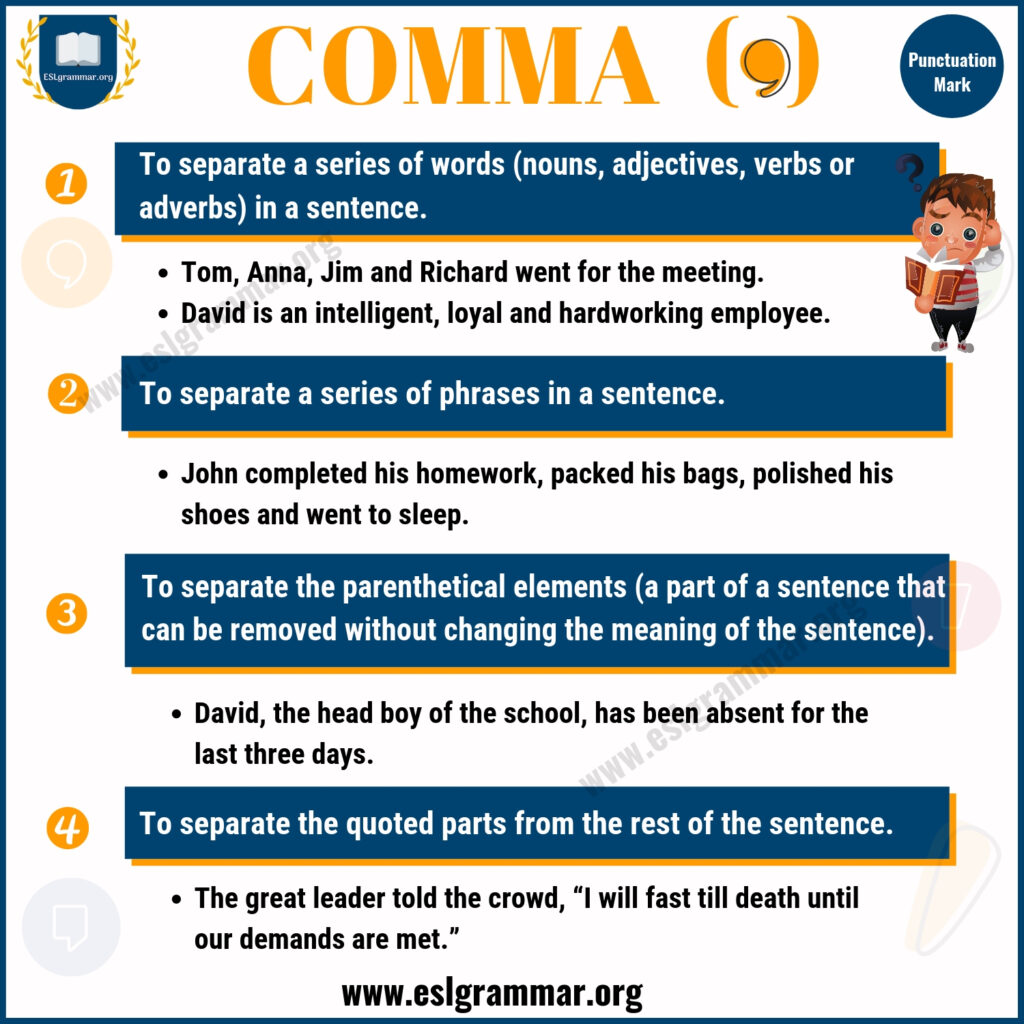
Comma Rules For And

"Of Course" Easy Comma Guide + Examples (All Variations)

"Of Course" Easy Comma Guide + Examples (All Variations)
Is There a Comma After "Of Course"? English Recap
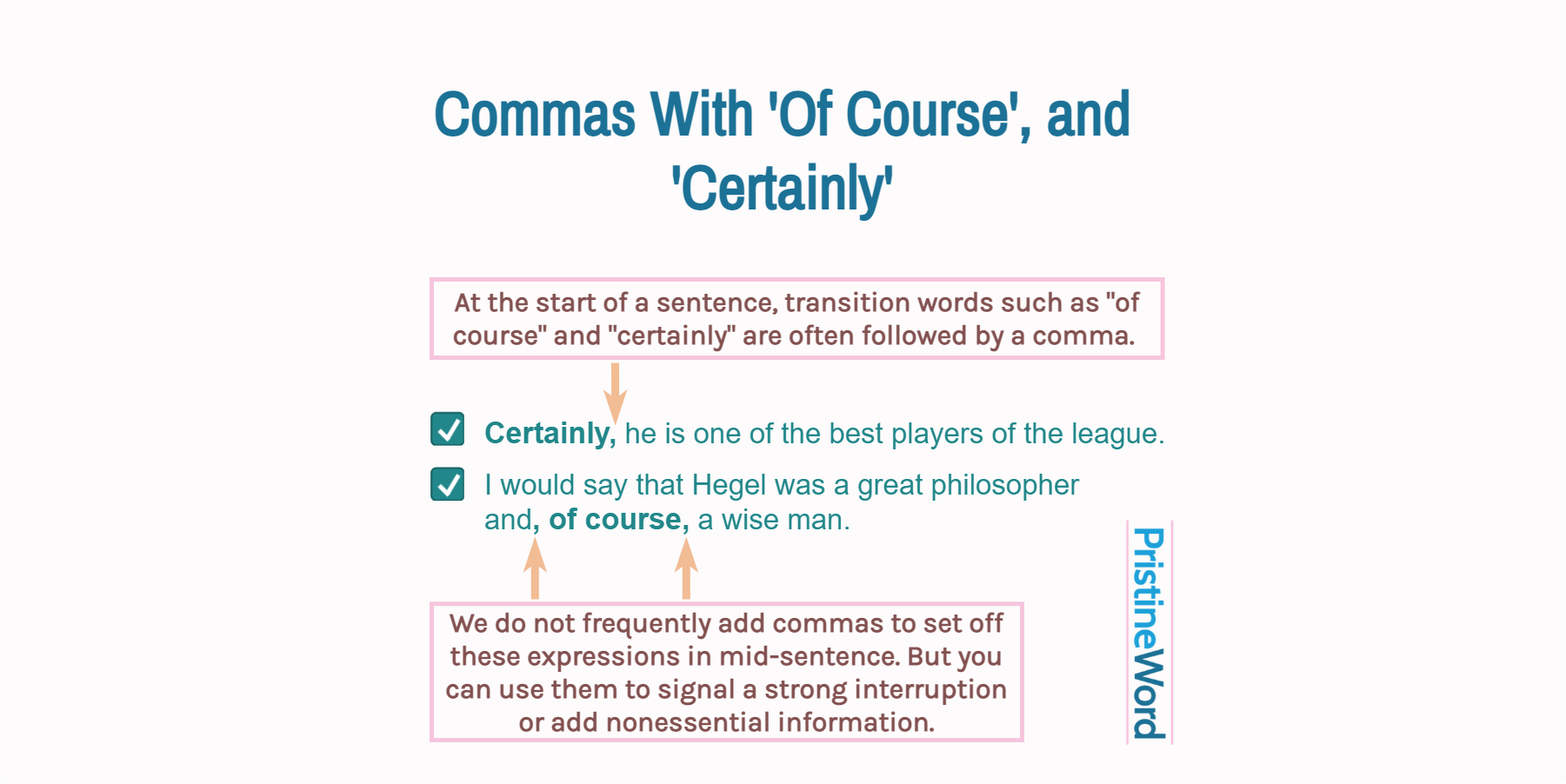
Commas With 'Of course' and 'Certainly'

Commas In Writing

starting a sentence with a prepositional phrase comma Jordon Venegas

Comma All About Commas In The English language English Grammar Notes
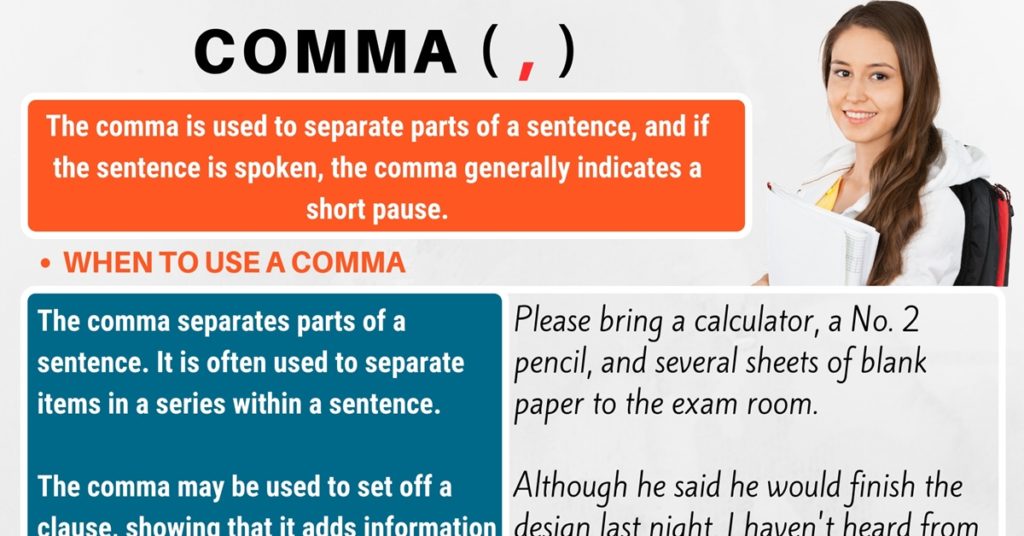
Comma (,) When to Use Commas with Useful Comma Rules Punctuation Marks
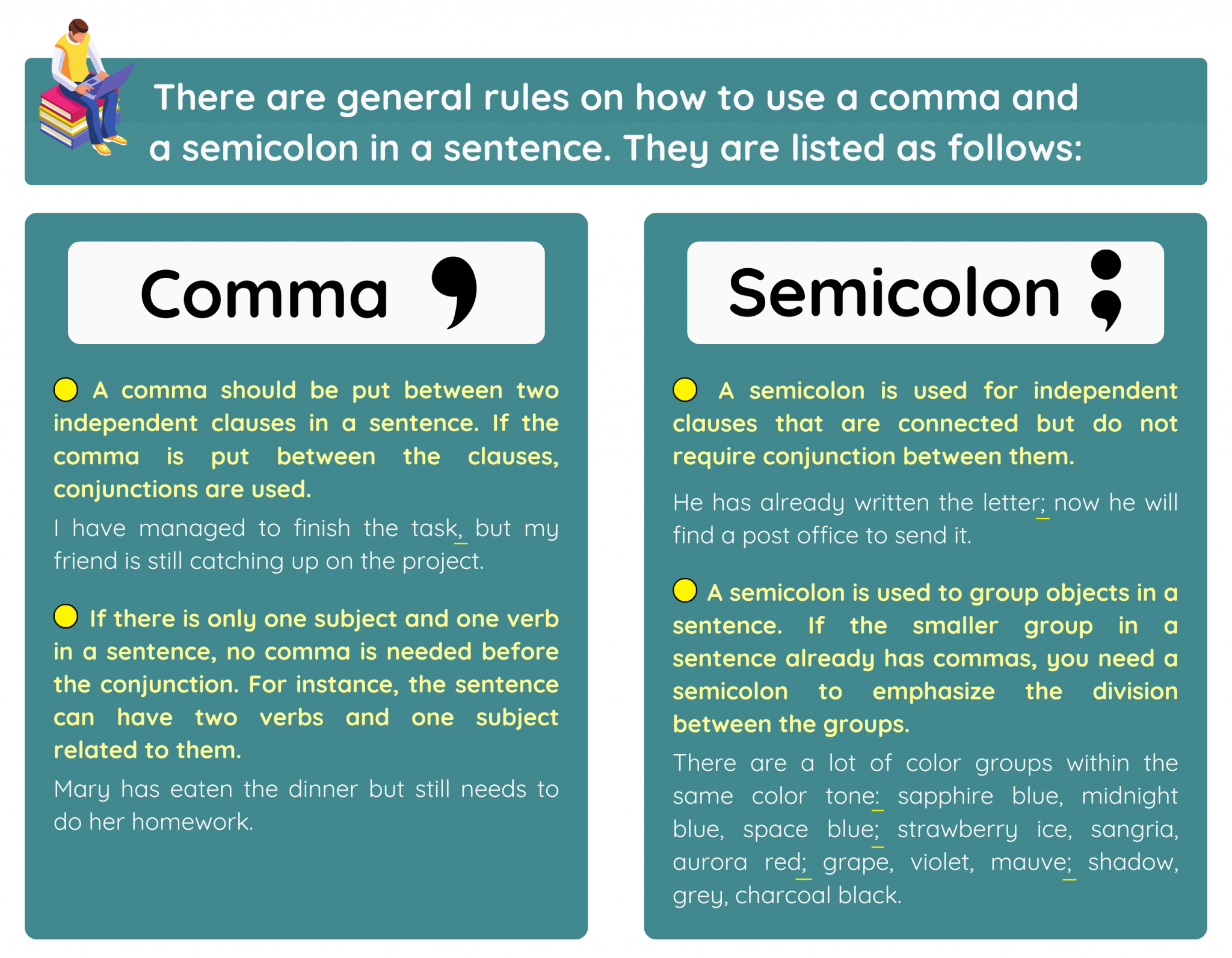
Use of Commas and Semicolons in Academic Texts Basic Rules
A Comma After And Isn't Necessary To Easily Understand The Sentence, And Leaving It Off Improves Sentence Flow, Being The Way The Sentence Would Most Likely Be Spoken.
So That Begins A Sentence Or Clause Does Not Take A Comma Unless A Parenthetical Phrase Or Clause Follows,.
It Could Be Perfectly Correct To Answer Considering The Matter In Hindsight, Those Thoughts Of Mine Were Of Course Ridiculous. Here, 'Course' Is Emphasized In Speech, Which Leads To No Pauses,.
Learn Chatgpt210,000+ Online Coursesjoin 69M+ Learnersstart Learning Today
Related Post: